Atmospheric Pressure In Inches Of Water . Of course not because air is a fluid and presses as much over as under your thumb. One atmosphere (101.325 kpa or 14.7 psi) is also the pressure caused by the weight of a column of fresh water of approximately 10.3 m (33.8 ft). NPT1/4 inch Pressure Gauge Manometer 2000kpa for Water Air Oil Dial from www.aliexpress.com 70 inches of water to atmospheres = 0.1721: How many inches of water in 1 atmosphere [standard]? Atmospheric pressure = h × d × g, where h is the height of the mercury column, d the density of mercury, and g the acceleration due to gravity.
Salt Dissolving In Water Physical Or Chemical. The salt may be regained by boiling off the water, leaving the salt behind. The reactant (sodium chloride, or nacl) is different from the products (sodium cation and chlorine anion).
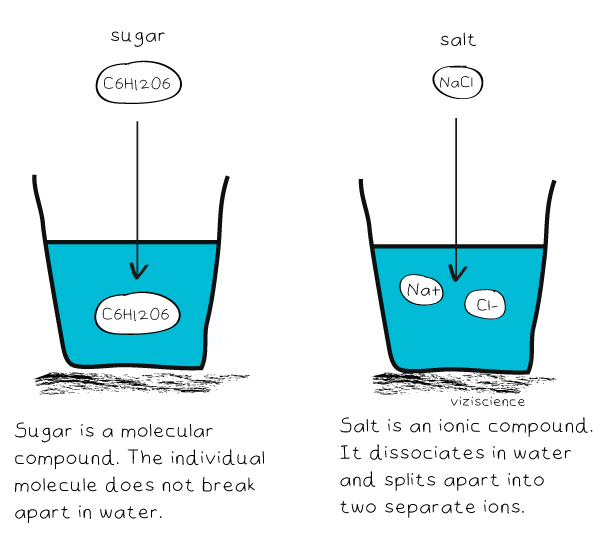
Chemical Equation For Sugar Dissolving In Water Tessshebaylo from www.tessshebaylo.com
When we heat the container containing the solution of water and salt, the salt will be left behind in the container and the water will be evaporated. As always, chemical change is characterized by the formation of new substances and the making and breaking of strong. When the nacl dissolves the na and cl ions do break apart.
Therefore Dissolving Salt In Water Is A Chemical Change.
In contrast, dissolving sugar or another covalent compound is a physical change because chemical bonds are not broken and new products are not formed. It is not a chemical change because no new chemical bonds are formed. Other changes of state include vaporization (liquid to gas), freezing (liquid to solid), and condensation (gas to liquid).
Dissolving Salt In Water May Be Considered A Physical Change Because No Change Occurs In The Electron Shells Of The Sodium And Chlorine Atoms And No Chemical Reaction Occurs Between Sodium Chloride And Its Solvent (Water).
The reactant (sodium chloride or nacl) is different from the products (sodium cation and chlorine. Is salt (nacl) dissolving in water a physical or chemical change? This is because, you can recover the salt by evaporating the water away.
In General A Physical Change Is Reversible Using Physical Means.
Is dissolving table salt (sodium chloride or nacl) a chemical change or a physical change? When salt is dissolved into water, the salt is said to have entered the aqueous state. When the nacl dissolves the na and cl ions do break apart.
The Dissolving Of A Solid In Water Is A Physical Change Because No Chemical Reaction Occurs And There Is.
The salt may be regained by boiling off the water, leaving the salt behind. The reactant (sodium chloride, or nacl) is different from the products (sodium cation and chlorine anion). It is dissolving because when you put salt (solute) in water (solvent), they become a homogeneous mixture, the.
It Is A Physical Change As No New Substance Is Formed.
From the wikipedia page of physical change. This question is bound to provoke controversy; First of all, we can call what happens when you put salt in water dissociation or dissolving.


Comments
Post a Comment